Music theory for listeners: how to learn it without an instrument
Music theory, for the ear
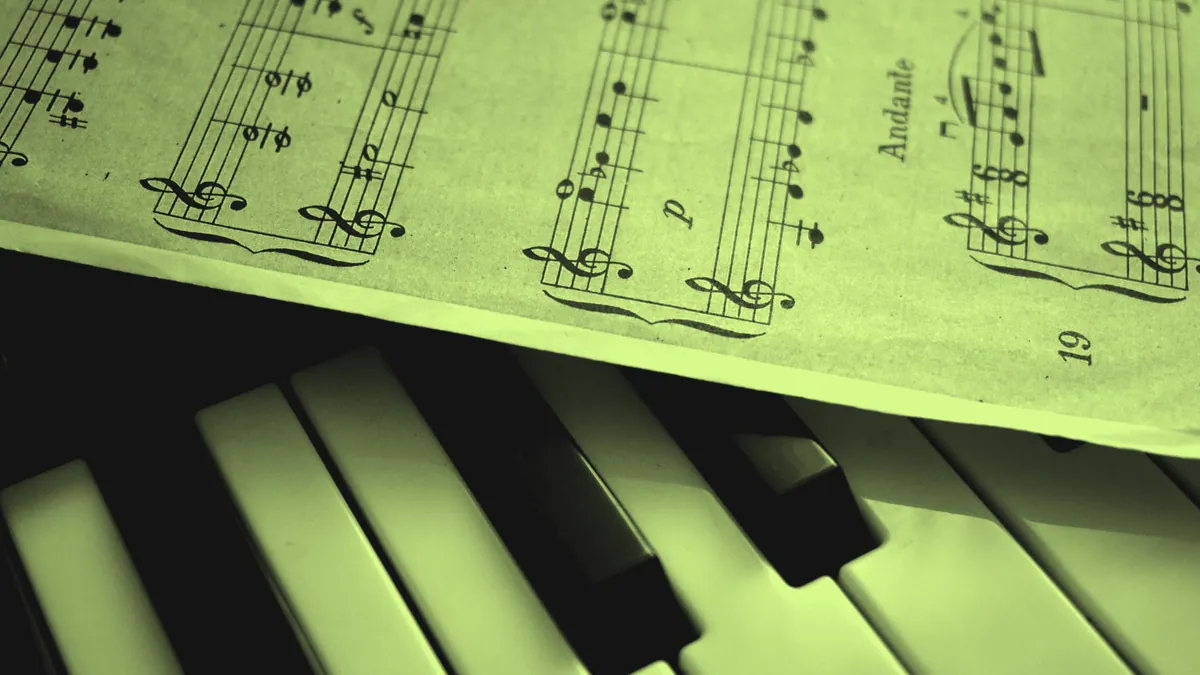
The fastest way to learn music theory as a listener is to skip the instrument entirely and start with the three ideas that explain almost everything you hear: notes, scales, and chords, what they are, how they combine, and why certain combinations sound tense while others sound settled.
You don't need to play piano or guitar to understand this. You need to know what to listen for, and then listen with intent.
Most people who search for "how to learn music theory" assume it means enrolling in a class, buying a $40 textbook, or spending a year on scale exercises at a keyboard. None of that is required if your goal is to understand recorded music better, not to perform it. Theory is a description of patterns that already exist in every song you've ever loved. Learning it as a listener means learning to name what your ear already notices.
What music theory actually describes
Music theory is the vocabulary and set of rules that explain how pitch and time get organized into something that sounds like music instead of noise. It didn't invent the patterns, composers and folk musicians worked them out by ear over centuries, and theory came along afterward to name and systematize what already worked. Three building blocks cover the vast majority of what you need:
- Notes, individual pitches, named A through G, that repeat in higher and lower octaves.
- Scales, a chosen set of notes played in order that establishes a "home base" pitch (the tonic) and a mood, usually major (bright, resolved) or minor (darker, unresolved).
- Chords, three or more notes from a scale played together, which is where harmony comes from and where a song's emotional weather gets set.
Everything else in theory, key signatures, modes, chord progressions, time signatures, is built from combinations of those three ideas. If you understand what a C major scale is and why a C major chord (C, E, G) sounds different from a C minor chord (C, E-flat, G), you already have more usable theory than most casual listeners will ever need.
Melody, harmony, and rhythm: the three forces theory explains
Once you have notes, scales, and chords, theory groups them into three larger forces that shape any piece of recorded music:
- Melody is the sequence of single notes you can hum, the line a lead vocalist or lead instrument carries. It moves through time, one note at a time.
- Harmony is what happens underneath the melody when multiple notes sound together as chords, and how those chords move from one to the next (a chord progression).
- Rhythm is the timing layer, the beat, the tempo, and the pattern of long and short notes that gives a track its groove, independent of which notes are being played.
A song like a Motown single and a bluegrass tune can share a nearly identical chord progression and sound completely different because of rhythm and instrumentation. That's the kind of thing theory lets you notice and name, rather than just feel vaguely.
Can you learn music theory without playing an instrument?
Yes. Theory is a description of sound relationships, not a set of finger positions. Reading about the interval between two notes, or hearing a major third versus a minor third in a song you already know, teaches the concept regardless of whether your hands ever touch a keyboard. Conservatory-trained musicians study theory on paper and by ear for years before it becomes automatic in their playing, the ear and the brain, not the fingers, are doing the real work.
That said, having something to point at helps. A picture of a piano keyboard is the single most useful visual aid in all of music theory, because it lays out every note in a scale, in order, on one flat surface, you can look at where the black and white keys sit without ever pressing one. Guitar diagrams work similarly for chord shapes, but the piano's linear keyboard makes scale structure (the pattern of half-steps and whole-steps) far easier to see at a glance than a guitar fretboard does.
Best ways to learn theory as a beginner, without college
You don't need a degree or a semester-long course to get a genuinely useful grasp of theory. A few approaches work well for someone starting from zero:
- A short, listener-focused book. Look for one built around examples in real recordings rather than exercises meant to be played. Skip anything that opens with fingering diagrams before it explains what a scale even is.
- Free printable worksheets on note names and rhythm values. These exist for absolute beginners and take minutes, not hours, they're about pattern recognition (which line is which note), not performance.
- Apps and websites built around ear training that play two notes or two chords and ask you to identify the difference. This trains recognition faster than reading alone, because theory is ultimately about sound, not text on a page.
- Actively re-listening to songs you already know while following along with a description of their chord progression or structure. Recognizing a concept in music you love cements it far better than an abstract example.
College-level theory courses exist mainly to prepare composers and performers to read, write, and analyze complex scores quickly under time pressure. That level of fluency is not what a listener needs. A weekend spent on the material above will get you further, for your purposes, than the first month of a college course would.
Does it matter which instrument you learn on?
If you do eventually want a physical reference point, piano is the standard choice for learning theory, for one structural reason: every note is laid out left to right in a straight line, white and black keys visible together, with no note ever hidden or duplicated in a confusing way the way frets and strings can be on a guitar. Guitar is a close second and has the advantage of being the instrument behind most popular chord charts, but its fretboard requires learning multiple physical positions for the same note before the underlying pattern becomes obvious. Neither choice is necessary if your only goal is understanding what you hear, but if you're curious enough to want a hands-on reference, piano will teach you the underlying structure fastest.
How long it actually takes
The core listener's vocabulary, note names, what a scale is, major versus minor, what a chord is, and how to recognize a few common chord progressions by ear, is realistically a two-to-four-week project of short daily sessions, not a "30-day mastery" program or a multi-year commitment. You're not learning to sight-read a symphony; you're learning to recognize patterns you've already heard thousands of times without having names for them. Start with scales and chords, since those two ideas unlock the most listening payoff for the least effort, then move into reading notation and rhythm only if you want to go deeper into how those sounds get written down.