Music scales explained: what a scale is and why it matters
Music scales, explained
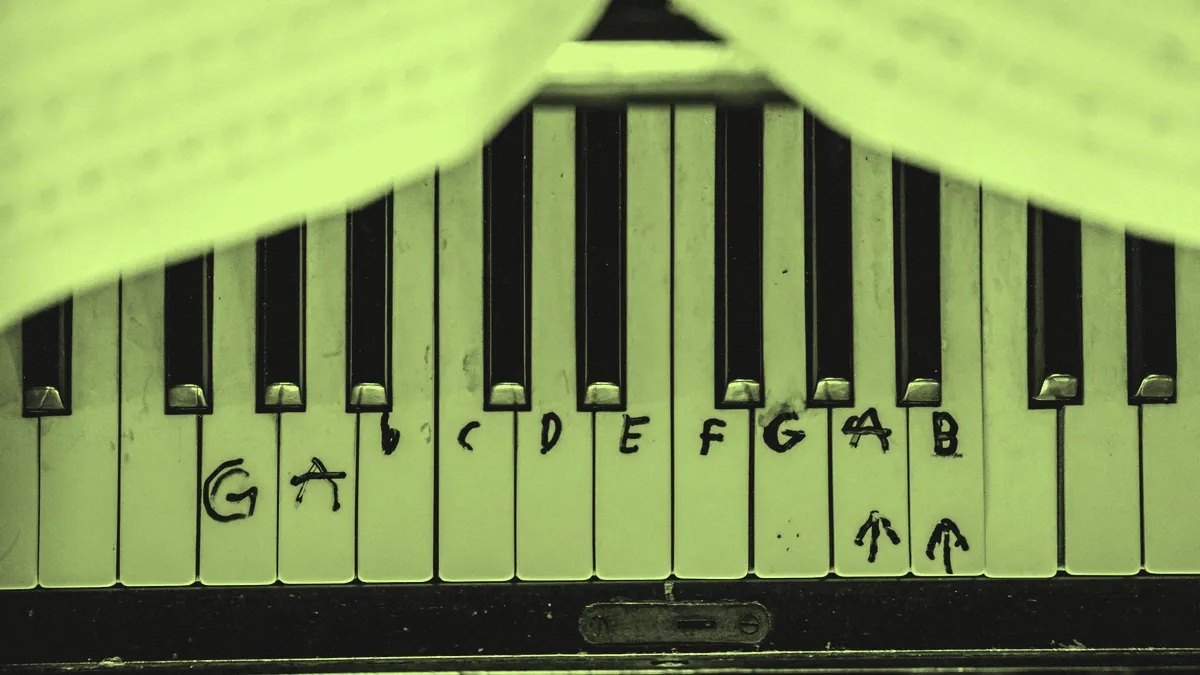
A music scale is a fixed set of notes, arranged from low to high, that establishes a home pitch and a specific mood for a piece of music, every melody and most chords you hear are built from one.
Scales aren't a separate topic from "real" music theory; they're the raw material almost everything else in theory describes.
The reason scales matter to a listener, not just a player, is that the particular pattern of a scale is what makes a song sound bright, sad, exotic, or unresolved before a single lyric is sung. Swap the scale under a melody and the emotional character changes even if the rhythm and words stay identical.
What a scale actually is
Take the twelve possible pitches in Western music (the seven natural notes A through G, plus five sharps/flats filling the gaps) and select a specific subset of them, in order, starting and ending on the same note an octave apart, that selection is a scale. The starting note is called the tonic, or "home" note; it's the pitch a melody tends to return to and the one that sounds most "resolved" when you land on it. The exact spacing between the notes you choose, measured in half steps (the smallest gap, like C to C♯) and whole steps (two half steps, like C to D), is what defines which scale you're hearing and gives it its character.
The major scale and the minor scale: theory's two default moods
The two scales you'll encounter constantly are major and minor, and the difference between them is a matter of which steps are whole and which are half.
A major scale follows this exact pattern of steps starting from its tonic: whole, whole, half, whole, whole, whole, half. Starting on C, that produces C-D-E-F-G-A-B-C, the "white keys only" scale on a piano, and the sound most listeners immediately recognize as bright, stable, and complete, because it's the scale under most children's songs, marches, and upbeat pop choruses.
A natural minor scale uses a different pattern: whole, half, whole, whole, half, whole, whole. Starting on A, that produces A-B-C-D-E-F-G-A, again all white keys on piano, but starting from a different note, which changes which intervals fall where relative to the tonic. That shift is why minor scales carry the melancholy, tense, or moody quality listeners associate with minor-key songs, from a lot of blues and metal to somber ballads. C major and A minor share the exact same seven notes; they're called relative keys, and the only difference is which note the ear treats as "home."
What modes are, and how they relate to scales
A mode is what you get when you take an existing scale and start it from a different one of its own notes, which shifts where the whole-step and half-step gaps fall relative to the new starting point, even though the actual notes played haven't changed. The major scale has seven modes, one starting from each of its degrees: Ionian (same as major, starting on the 1st degree), Dorian (2nd degree), Phrygian (3rd), Lydian (4th), Mixolydian (5th), Aeolian (6th degree, this is the natural minor scale under a different name), and Locrian (7th).
So modes vs. scales isn't really an either/or question, a mode is a scale, just one defined by its relationship to a parent major scale rather than built from scratch. Dorian mode (think of the moody, slightly jazzy sound in a lot of Miles Davis's modal recordings, or the melodic character of many Irish folk tunes) and Mixolydian mode (common in blues-rock and a lot of Grateful Dead-adjacent jam material) are the two you'll hear most often outside straightforward major or minor.
Pentatonic scales: five notes, huge reach
A pentatonic scale strips a seven-note scale down to five notes by removing the two that create the most tension against the tonic. The major pentatonic scale removes the 4th and 7th degrees of the major scale, from C major (C-D-E-F-G-A-B), that leaves C-D-E-G-A. The minor pentatonic removes the 2nd and 6th degrees of the natural minor scale, from A minor, that leaves A-C-D-E-G. Because it has no half-step clashes near the tonic, the pentatonic scale is close to impossible to make sound "wrong," which is exactly why it's the backbone of blues guitar soloing, a huge amount of rock and country lead melody, and folk melodies across cultures worldwide, independent of each other, going back centuries.
How scales shape the mood of what you're hearing
This is the payoff for a listener: once you can tell major from minor by ear, you can predict, before you even think about it consciously, whether a song is going to feel resolved or unsettled. A song that stays firmly in a major scale and keeps landing back on its tonic (think most classic Motown or a straightforward country love song) reads as stable and upbeat. A song built on a minor scale, or one that keeps avoiding its tonic, reads as tense or sad even at a fast tempo, a lot of drum and bass and darker electronic music uses exactly this trick, pairing a minor-scale melody with high energy to create anxious rather than triumphant excitement. Modal writing, Mixolydian, Dorian, creates a third category: neither clearly happy nor clearly sad, which is why so much modal jazz and modal folk music feels ambiguous or floating rather than emotionally direct.
Reading and finding scale notes without an instrument
You don't need to play a scale to recognize one. A picture of a piano keyboard is the clearest reference: lay out an octave, mark which keys belong to C major (all the white keys) versus C minor (three of the white keys swapped for the black keys directly to their left), and you can see the pattern rather than having to memorize it as abstract letters. Guitar-based scale charts and "scale finder" tools do the same job for guitarists, mapping a chosen scale onto the fretboard, but they're built for playing, not listening, as a listener, the keyboard picture and your own ear, trained on real recordings, will teach you far faster than any chart.