What is rhythm in music? Beat, tempo and time, explained
What rhythm in music is
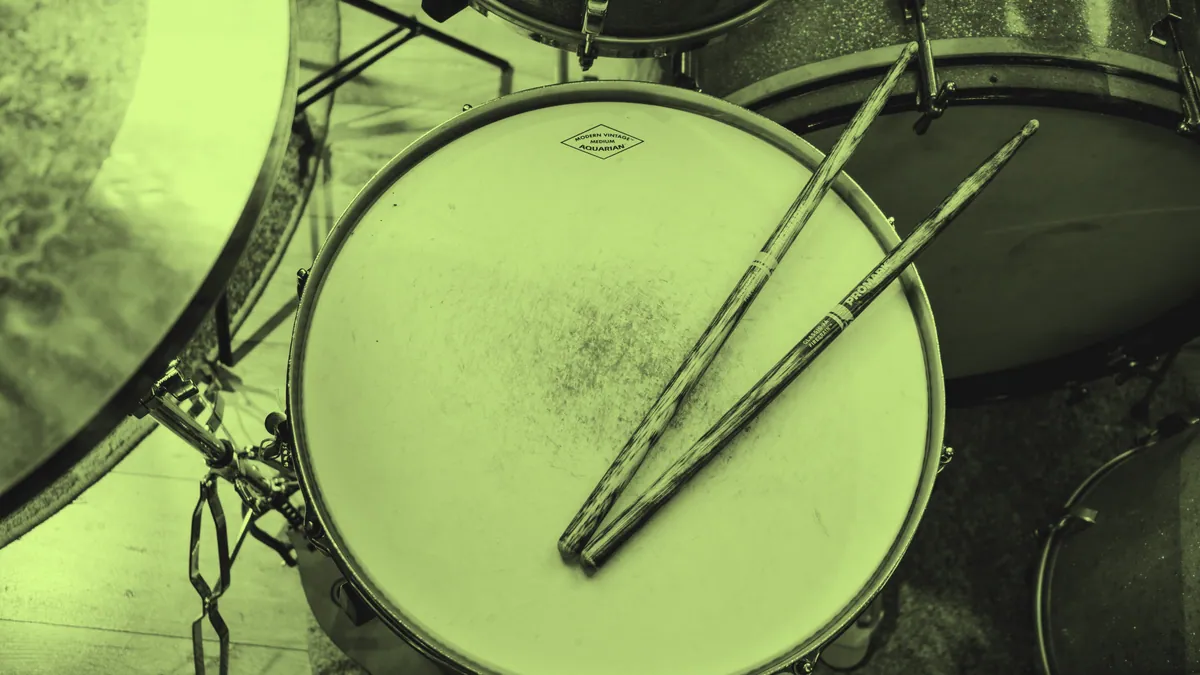
Rhythm in music is the pattern of long and short sounds and silences arranged in time, how notes are spaced, grouped, and accented against an underlying pulse.
It's the layer of music that exists independently of pitch: you can tap out a song's rhythm on a tabletop with no melody at all and still recognize it.
Rhythm is often confused with beat, tempo, and meter, because all four live in the time dimension of music and interact constantly. They're not the same thing, though, and pulling them apart is the fastest way to actually hear what's happening in a track instead of just feeling that it "grooves."
Beat vs. rhythm: the difference that confuses most listeners
The beat is the steady, even pulse underneath a piece of music, the thing you tap your foot to, evenly spaced, like a metronome or a clock. Rhythm is the actual pattern of notes and rests played against that beat, and it almost never matches the beat exactly. A drummer's steady hi-hat pattern is close to a pure beat; the vocal melody or snare pattern layered on top of it, with its long-held notes, quick clusters, and pauses, is rhythm. Every rhythm implies a beat, even when the beat itself is never explicitly played, your body still tracks it, which is why you can dance to a song even during a beatless a cappella passage.
Tempo: how fast the pulse moves
Tempo is the speed of the beat, measured in beats per minute (BPM). A ballad might sit around 60-70 BPM, a mid-tempo pop song around 100-120 BPM, and up-tempo dance or punk material well above 140 BPM. Classical scores traditionally mark tempo with Italian terms rather than exact numbers, largo and adagio for slow, andante for a walking pace, allegro for fast, presto for very fast, because those markings describe a feel more than a fixed number, and conductors have some latitude in interpreting them. Tempo alone can flip a song's emotional read: the exact same melody and chords, slowed down, can turn a driving rock song into a mournful ballad.
Meter and time signatures: how beats get grouped
Meter is how beats are organized into recurring groups, and a time signature is the notation that tells you the size of those groups. The most common time signature in popular music is 4/4 (sometimes called "common time"): four beats per measure, each beat a quarter note. Waltzes use 3/4, three beats per measure, giving that unmistakable "ONE-two-three, ONE-two-three" lilt. Compound meters like 6/8 group beats in twos that each subdivide into three, producing the rolling, uneven-feeling pulse common in a lot of gospel ballads, Irish jigs, and some blues shuffles. Meter is what your body is really responding to when a song feels like it's "in three" or marching in a steady four, it's the grid rhythm gets laid on top of.
Syncopation: rhythm that fights the grid on purpose
Syncopation happens when a rhythm places emphasis on a beat, or part of a beat, where you wouldn't expect it, typically an off-beat or a weak part of the measure, creating a deliberate friction against the steady pulse underneath. It's the mechanism behind "groove": funk basslines built by James Brown's bands, the clipped, off-the-beat guitar stabs in reggae (playing on the upbeats instead of the downbeats), and the swung, delayed feel of jazz drumming all rely on syncopation to create forward momentum and surprise. Without syncopation, rhythm would just be the beat repeated at different note lengths, it's the "wrongness," resolved a split second later, that makes music feel alive rather than mechanical.
How rhythm sounds different across genres
The same basic elements, beat, tempo, meter, syncopation, combine differently across styles, and hearing those differences is one of the clearest ways to tell genres apart by ear alone:
- Blues commonly uses a shuffle feel, subdividing beats unevenly (long-short instead of even eighth notes) for a rolling, behind-the-beat swagger.
- Jazz swings its eighth notes similarly but adds heavy syncopation and rhythmic improvisation on top, especially in the drums and bass.
- Gospel frequently layers handclaps and call-and-response phrasing that deliberately land off the main beat, building intensity through rhythmic tension.
- Classical music covers the widest range of all, from the strict, marching meter of a symphony's march movement to the free, almost rhythm-less tempo (rubato) of a solo piano nocturne.
Learning to isolate rhythm from melody, listening specifically to what the drums, bass, or handclaps are doing rather than the tune on top, is the single fastest way to start hearing genre and groove the way a musician does, with no instrument required.