Ambient music: what it is, how it is made, and why it works
Ambient music
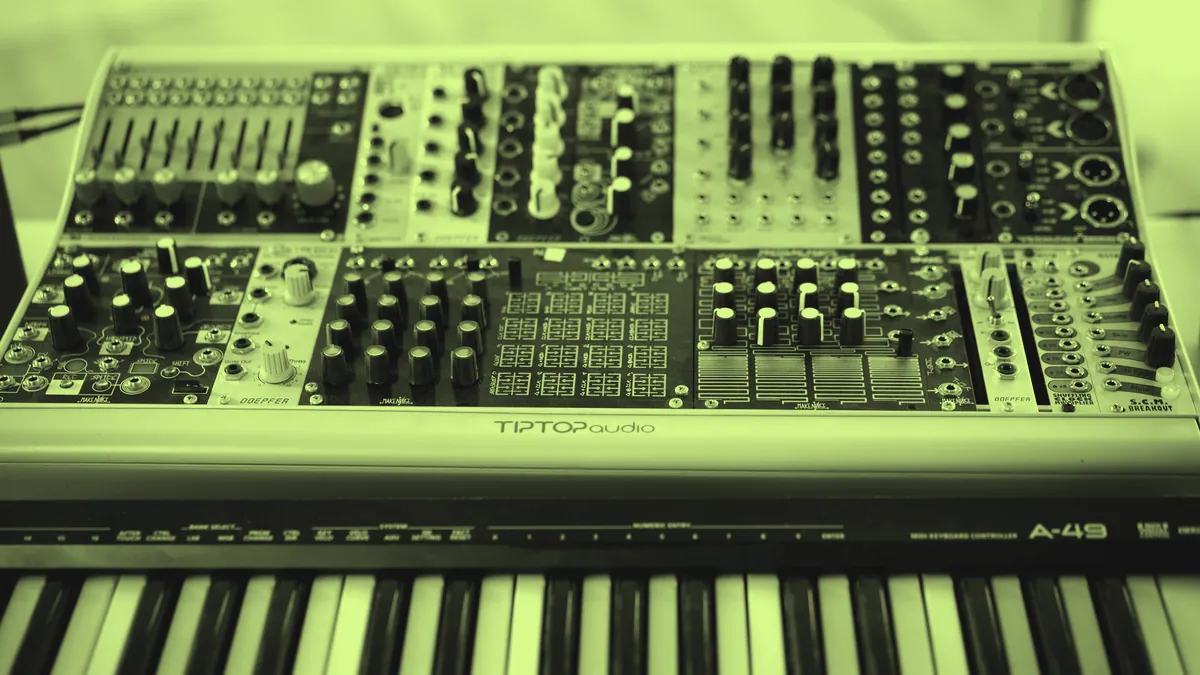
Ambient music is a genre built to create or enhance an atmosphere rather than to hold a listener's direct attention, slow-moving, mostly beatless soundscapes made from synthesizer pads, drones, field recordings, and processed instruments, designed to be as interesting to actively listen to as it is to ignore.
Brian Eno, who effectively named and defined the genre with his 1978 album "Ambient 1: Music for Airports," described the goal as music that could "accommodate many levels of listening attention without enforcing one in particular", it works equally well as a focused listen or as background you barely notice.
What makes a track "ambient"
Ambient music strips away the elements most genres rely on to hold attention. There is usually no steady drumbeat pulling you forward, no verse-chorus song structure, and often no clear melody to hum. In their place: long, sustained tones (drones), slow-evolving synthesizer textures (pads), and sound treated as color and space rather than as a tune. Where a pop song is built to be memorable in three minutes, an ambient piece is built to be inhabited, Eno's "Music for Airports" tracks run six to ten minutes each and are engineered to loop and drift almost indefinitely. The genre trades forward momentum for depth: instead of asking "what happens next," ambient asks "what does this space feel like."
How ambient tracks are actually built
Four techniques recur across almost all ambient production:
- Drone. A held, unchanging tone or chord, sometimes a single note stretched across an entire piece, that gives the music a stable floor. Drone removes the sense of harmonic "movement" that most genres rely on.
- Pads. Slow, soft-edged synthesizer chords with long attack and release times, so notes fade in and out rather than starting and stopping sharply. This is the single most identifiable ambient sound, a wash rather than a note.
- Layering and texture. Multiple sustained sounds, synth pads, processed piano, bowed strings, wind instruments, stacked on top of each other so the ear can move between them, hearing something slightly different each pass.
- Processing and space. Heavy reverb and delay stretch a sound out in time, generative or chance-based composition (Eno used tape loops of different lengths that phase against each other) lets the music evolve without a composer scripting every second, and field recordings, rain, room tone, distant traffic, anchor the abstract sound to a real place.
Because so much of the genre relies on slow change rather than events, ambient composers often build in randomness on purpose: Eno's own "generative" approach lets a handful of short loops of different lengths combine in ever-changing patterns, so the piece technically never repeats exactly, even over hours.
Why it works as a listening experience
Ambient music works because it changes what your attention is doing rather than what it is following. Most music asks you to track a narrative, a melody, a rhyme, a build toward a chorus or a drop. Ambient removes that narrative and lets attention settle into texture instead, which is part of why it is effective at lowering perceived stress and supporting focus: there is nothing demanding to be "solved" or predicted, so the mind can either drift or concentrate on other tasks without the music competing for foreground attention. This is also why ambient became the default soundtrack for the modern spaces that most need to be calm without being silent, airports (literally, in Eno's case), waiting rooms, work-from-home focus sessions, and sleep or meditation apps.
The genre's dark and cinematic branch
Dark ambient is ambient's shadow side: the same slow, beatless, drone-based approach, but built from low, dissonant, unsettling tones instead of soft, consonant ones, droning sub-bass, metallic scrapes, distant industrial clangs, minor and atonal harmony. Where mainstream ambient aims for calm, dark ambient aims for unease, tension, or dread, and it draws heavily on horror-film scoring technique. Lustmord is generally credited as the genre's founding figure, and the style overlaps with drone metal and horror-game sound design; it is a favorite for listeners who want atmosphere without melody but want it unsettling rather than soothing.
Where to actually start listening
A handful of records function as the genre's accepted entry points, spanning its calm and its stranger edges:
- Brian Eno, "Ambient 1: Music for Airports" (1978), the genre's founding statement, built from tape loops of piano and voice.
- Brian Eno, "Discreet Music" (1975), an earlier, more minimal precursor, made with a tape-delay system Eno built himself.
- Harold Budd & Brian Eno, "The Pearl" (1984), piano-led ambient, warmer and more melodic than Eno's solo work.
- Stars of the Lid, "The Tired Sounds of Stars of the Lid" (2001), slow-building orchestral drone, a touchstone for the genre's 2000s revival.
- William Basinski, "The Disintegration Loops" (2002), decaying tape loops recorded as the physical tape itself fell apart, released around September 11, 2001, and widely read as an elegy.
- Tim Hecker, "Ravedeath, 1972" (2011), pipe organ recordings processed into dense, cathedral-scale ambient noise, representing the genre's more abrasive contemporary wing.
These sit alongside, and often overlap with, electronic music broadly and with new-age and minimalist classical composers like Harold Budd, Max Richter, and early Steve Reich, all of whom share ambient's interest in slow change over fast events.
Finding and using ambient day to day
Ambient is now built into everyday listening tools well beyond dedicated albums, ambient music on iPhone most often refers to the built-in background sounds feature in iOS Accessibility settings (rain, ocean, white/pink/brown noise, and similar tones) as well as ambient playlists and stations across streaming apps, both of which apply the genre's core idea, steady, undemanding, non-narrative sound, as a practical tool for focus, sleep, and masking distracting noise rather than as an album to sit and listen through start to finish. Either use is faithful to what the genre was built for: sound designed to shape a room's mood without insisting on being the center of it.