What is hip hop music? Its elements and its history
What hip hop music is
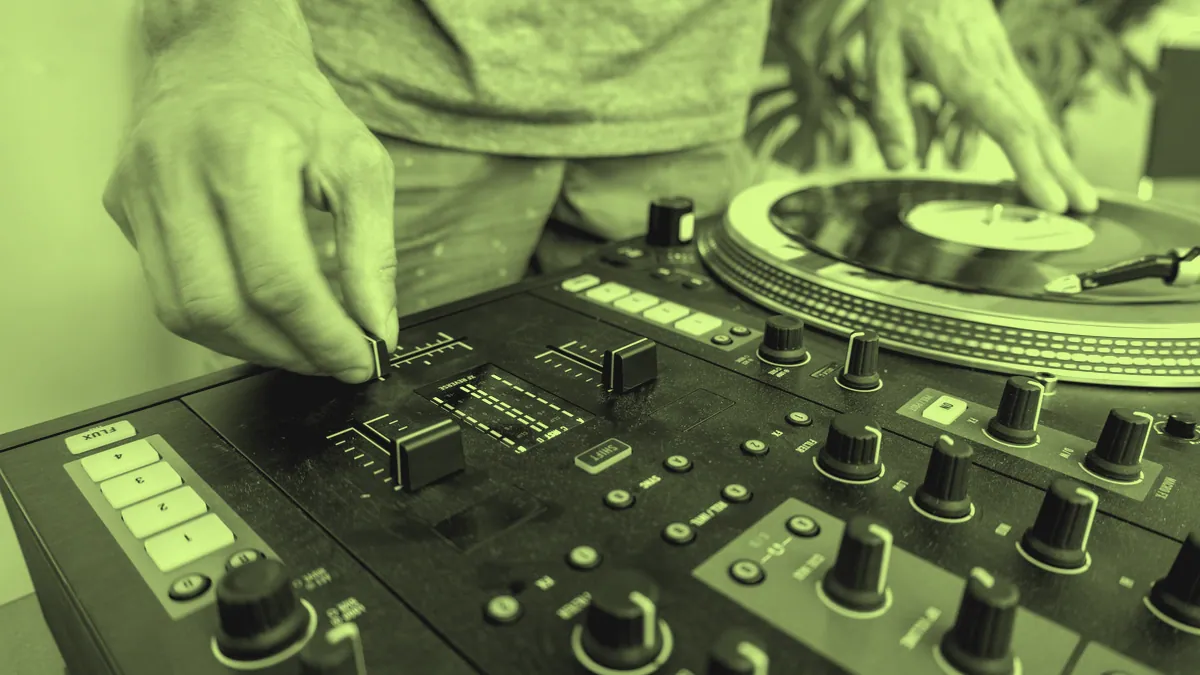
Hip hop music is a genre built on rhythmic, rhymed spoken vocals (rapping) performed over a beat assembled from sampled records, looped breaks or programmed drum machines, and it developed as the musical arm of a broader hip hop culture that also includes DJing, graffiti art and breakdancing.
Unlike genres defined mainly by chord progression or melody, hip hop is defined by its beat construction and its vocal delivery, the rhythm and the words are doing the work that melody does in most other popular music.
The four elements hip hop grew out of
Hip hop culture is traditionally described as resting on four elements, each with its own originator credited in the culture's history: DJing (manipulating records on turntables to isolate and extend the most danceable part of a song), MCing or rapping (rhythmic vocal delivery over that beat), breakdancing (an athletic dance style built to match the DJ's extended breaks), and graffiti art (the culture's visual identity, developed largely independently of the music but adopted as part of the same movement). The music genre that most people mean by "hip hop" today grew directly out of the first two elements, the DJ's beat and the MC's voice, and eventually became commercially dominant enough to represent the whole culture in casual usage.
How the beat is built
Hip hop's rhythm section has always been assembled rather than played live in the conventional band sense. Early DJs used two copies of the same funk or soul record to loop and extend just the drum break, the short instrumental section where the band drops out and the rhythm takes over, feeding dancers a continuous groove that the original record only offered for a few seconds at a time. That technique, pioneered at Bronx block parties in the early-to-mid 1970s, is the direct ancestor of sampling, where producers lift a short section of an existing recording (a drum break, a bassline, a horn stab) and loop or rearrange it inside new software or hardware samplers. From the mid-1980s onward, drum machines like the Roland TR-808 let producers program beats from scratch instead of sampling them, giving hip hop the deep, synthetic sub-bass "808" sound that still defines a huge share of the genre, especially trap-style production.
The rapped vocal
Rapping treats the voice as a rhythm instrument as much as a melodic one: words are delivered in patterns that lock into or deliberately push against the beat, using rhyme, internal rhyme, and syllable stress the way a drummer uses accents. Flow (the way a rapper's rhythm and phrasing sit against the beat), cadence, and wordplay are the primary things listeners evaluate a rapper on, alongside lyrical content, which historically ranges from party-oriented boasting to detailed social and political commentary about the conditions of Black urban life in America.
A brief history
- Origins (early-to-mid 1970s): DJ Kool Herc's Bronx block parties, where extending funk and soul breaks on two turntables originated the core technique.
- Old school (late 1970s, mid 1980s): hip hop's first recorded hits and the emergence of dedicated MCs, moving the culture from live parties onto vinyl.
- Golden age (mid-1980s, early 1990s): rapid growth in lyrical complexity and sample-based production, widely considered the genre's most creatively fertile period.
- Regional explosion (1990s): distinct East Coast, West Coast and Southern styles and scenes each developed their own sound and slang.
- Mainstream dominance (2000s, present): hip hop became the best-selling genre in the US, absorbing and reshaping pop, R&B and, through trap, much of Southern hip hop's 808-driven sound into the current commercial mainstream.
Hip hop's subgenres
Because hip hop has been a dominant, constantly evolving genre for decades, it splits into many regional and stylistic subgenres: East Coast boom bap (drum-break-based, lyrically dense), West Coast G-funk (funk-sampling, laid-back), Southern trap (808-driven, hi-hat-heavy), conscious or political hip hop (lyrics centered on social commentary), and hybrid forms like hip hop soul and alt-R&B that blend rapped and sung vocals over hip hop-style beats. Live shows and festivals dedicated to the genre, from local club nights to major festivals in cities like Las Vegas, remain central to how the culture circulates today, alongside music videos, which have been part of hip hop's identity since the genre's earliest MTV exposure in the 1980s.
How to listen for what's actually happening
When you listen to a hip hop track with intention, separate the beat from the vocal first: notice what the drum pattern and bassline are built from (a recognizable sample, a programmed 808 pattern, a live-sounding loop), then listen to how the rapper's flow sits against that pattern, ahead of the beat, behind it, or locked precisely onto it. That separation is the fastest way to hear what a producer and an MC are each contributing, and it's the same listening skill that lets you recognize a classic funk or soul break the moment a new hip hop track loops it.