What is blues music? The root of most popular music
What the blues is
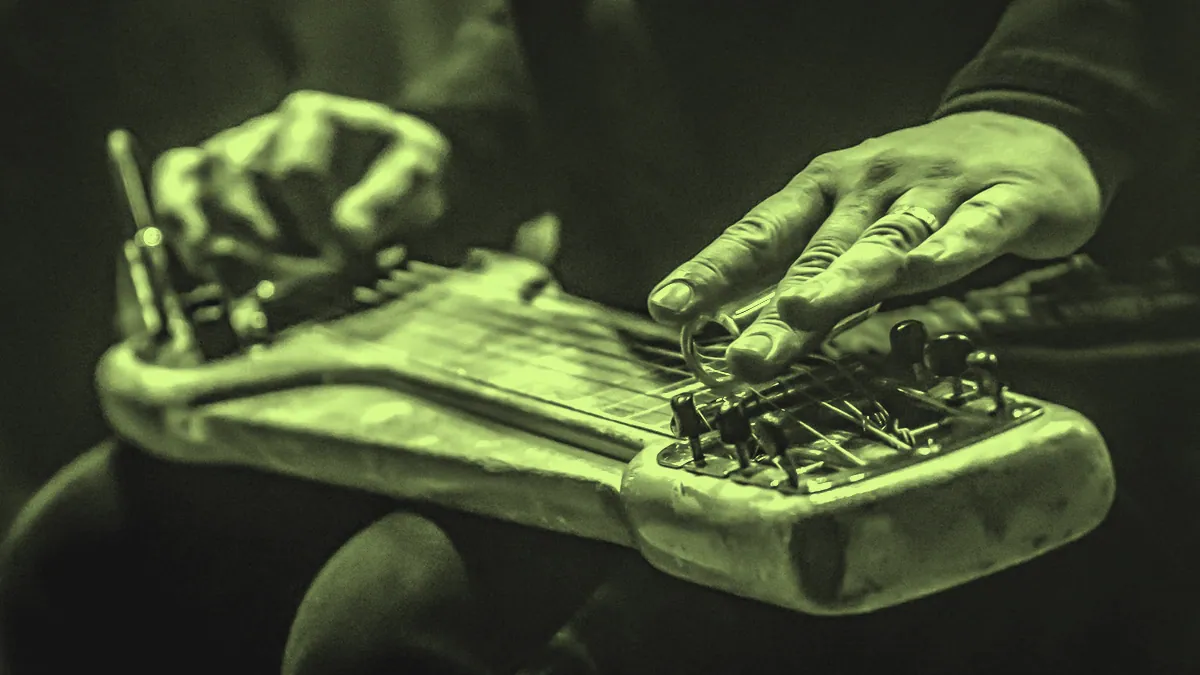
Blues is a genre built on a simple, repeating chord structure, "blue" notes that bend between major and minor, and a call-and-response feel between voice and instrument, and it's arguably the single most influential root in American popular music, feeding directly into jazz, rock, soul, and country.
It came out of the Mississippi Delta and other parts of the rural South in the decades after the Civil War, shaped by field hollers, spirituals, and work songs sung by Black communities, and it turned personal hardship, loss, poverty, longing, into a musical language that could be endlessly reused and reshaped.
What actually makes a song "the blues"
Most blues songs share a specific structure: the 12-bar blues, a repeating chord pattern usually built on three chords, played over 12 measures, where a lyric line is typically sung, repeated with a slight variation, and then answered with a resolving third line. That pattern is so foundational that once you can hear it, you'll notice it hiding inside rock songs, jazz standards, and R&B tracks that never advertise themselves as blues. Layered onto that structure are "blue notes", notes bent slightly flat, usually the third, fifth, or seventh degree of the scale, that sit between the notes of standard Western tuning. That bend is what gives blues singing and blues guitar their expressive, almost vocal quality; a slide guitarist stretching a note or a singer sliding into a pitch is using the same technique. And the music constantly uses call-and-response: a vocal line answered by a guitar phrase, a solo instrument answering a horn section, a structure borrowed directly from the field hollers and gospel traditions blues grew out of.
Where it originated and how it spread
Blues formed in the American South in the late 1800s and early 1900s, most famously in the Mississippi Delta, where musicians like Charley Patton and Son House developed the raw, solo-guitar-and-voice style now called Delta blues. As Black Southerners migrated north to cities like Chicago in the early-to-mid 20th century, the music moved with them and picked up electric guitars, drums, and a bigger, louder band sound, the Chicago blues of Muddy Waters and Howlin' Wolf. That electrified, amplified blues became the direct template for early rock and roll: Chuck Berry built his guitar style on blues phrasing sped up and sharpened, and British bands like the Rolling Stones openly modeled themselves on Chicago blues records before finding their own sound.
Why it became the root of so many other genres
Blues didn't stay contained to one genre because its core ingredients, the chord structure, the blue notes, the emotional directness, are useful building blocks for almost any style of popular music.
| Genre | What it kept from blues |
|---|---|
| Rock | The chord structure, guitar phrasing, and rebellious attitude, sped up and amplified |
| Jazz | Blue notes and call-and-response phrasing, especially in horn solos |
| Soul | The vocal expressiveness and emotional directness, merged with gospel |
| Country | The storytelling and some chord vocabulary, especially in early honky-tonk |
| Funk | The rhythmic groove and call-and-response, pushed toward dance |
That's a big part of why the blues stays popular even though it rarely tops modern charts on its own, you're hearing its fingerprints constantly in genres that outsold it, from a gospel-trained soul singer like Aretha Franklin bending a note the same way a Delta blues singer would, to a jazz saxophonist working blue notes into an otherwise complex solo.
Why some listeners find it repetitive at first
Because the 12-bar structure repeats so consistently, blues can sound formulaic to a listener expecting constant melodic surprise, the way pop or classical music often delivers it. But the interest in blues isn't usually in the chord structure changing, it's in what a performer does within that fixed frame: how far they bend a note, how they phrase a lyric against the beat, the tone they pull out of a guitar or a voice. A B.B. King solo and a Robert Johnson recording share the same underlying structure but sound almost nothing alike, because the personality lives in the details, not the form. That's also exactly what jazz took from blues: the idea that a fixed structure is just scaffolding for real-time expression.
Where to start listening
A short path through blues history covers the range of the genre without overwhelming a new listener:
- Robert Johnson, solo Delta blues from the 1930s, raw and haunting, usually considered the genre's most mythologized figure
- Muddy Waters, electric Chicago blues from the 1950s, the direct bridge into rock and roll
- Howlin' Wolf, a huge, growling voice over hard-driving Chicago band arrangements
- B.B. King, melodic, vocal-style electric guitar playing that influenced virtually every rock guitarist who followed
- Etta James, blues merged with soul, showing the direct line into R&B and soul singing
Listen for the bend in a guitar note or a held vocal note first, once you can hear that specific move, you'll start recognizing it everywhere else in your music library, because almost nothing in American popular music built after 1950 was untouched by it.