What is classical music? A map for the curious listener
What classical music is
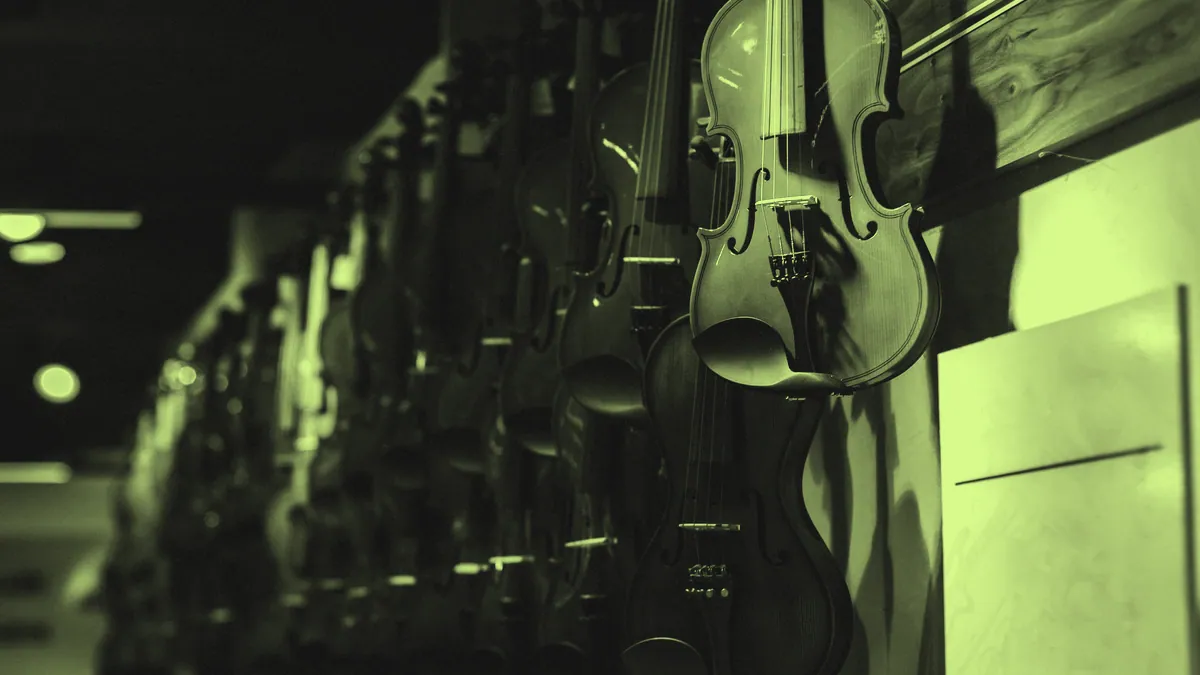
Classical music is Western art music composed with formal notation and structure, spanning roughly the last thousand years but centered practically on the period from about 1600 to the present, orchestral, chamber, vocal, and solo instrumental works built around written scores rather than improvisation or recorded-in-the-moment performance.
Unlike genres defined by a single rhythm or instrument, classical music is defined by its tradition of composition: a piece exists first as a written score that different performers and orchestras can interpret across generations, which is why the same Beethoven symphony recorded in 1950 and 2020 can sound genuinely different while remaining the same piece.
The historical eras that shape how it sounds
Classical music is usually mapped by era, and the era tells you a lot about what you're about to hear before a note starts:
- Baroque (roughly 1600-1750). Ornate, mathematically intricate, built on steady rhythmic pulse and layered melodic lines (counterpoint). Johann Sebastian Bach's fugues and Antonio Vivaldi's "The Four Seasons" are the reference points, dense, energetic, often harpsichord- or organ-driven.
- Classical era (roughly 1750-1820). Cleaner, more balanced and symmetrical than Baroque, with clearer melodies over simpler accompaniment. This is Mozart and Haydn, and the early work of Beethoven, the era that gave the whole tradition its name and standardized forms like the symphony and the string quartet.
- Romantic (roughly 1820-1900). Bigger orchestras, bigger emotional swings, more chromatic harmony and dramatic dynamic contrast. Beethoven's later work bridges into this era; Brahms, Tchaikovsky, and Chopin define its heart, music built to feel personal and intense rather than balanced and formal.
- Modern and contemporary (1900, present). Splinters in many directions at once: Debussy's impressionist harmony, Stravinsky's rhythmic upheaval ("The Rite of Spring" famously caused a riot at its 1913 premiere), Philip Glass and Steve Reich's minimalism built on repeating patterns, and film composers like John Williams carrying orchestral technique into a completely different medium.
The forms a piece can take
Beyond era, classical works are organized by form, the structural container a composer chooses, which tells you roughly what to expect from the piece's shape:
| Form | What it is |
|---|---|
| Symphony | A large work for full orchestra, usually in three or four movements |
| Concerto | A solo instrument (piano, violin) featured against a full orchestra |
| Sonata | A work for one or two instruments, often piano solo or piano plus one other |
| String quartet | Chamber music for two violins, viola, and cello |
| Opera | Fully staged sung drama with orchestra, singers, and often chorus |
| Requiem / mass | Choral and orchestral setting of a sacred text |
Composers is the operative word throughout classical music in a way it isn't in most other genres, the person who wrote the piece, often centuries before the performance, is treated as the primary artist, with the conductor and performers as interpreters rather than co-creators in the way a band member is.
How to actually start listening
The biggest hurdle for new classical listeners isn't taste, it's navigation: pieces run long, movements aren't songs, and there's no chorus to wait for. A workable approach is to listen movement by movement rather than committing to a full 40-minute symphony on the first try, and to start with pieces built around a clear emotional or narrative hook: Vivaldi's "The Four Seasons" (each concerto paints an actual season), Beethoven's Fifth Symphony (the four-note opening motif is one of the most recognizable phrases in music), Tchaikovsky's "1812 Overture" (built around real historical conflict, complete with cannon fire in the score), or Debussy's "Clair de Lune" (a short, mood-driven solo piano piece, a gentle entry point). From there, following one era at a time, Baroque, then Classical, then Romantic, builds a clearer sense of how the tradition evolved than jumping around at random.
Where to hear it now
A classical music radio station is a broadcast (terrestrial or streaming) dedicated to classical programming, in the US, stations like WQXR in New York and Classical KUSC in Los Angeles are long-running examples, alongside satellite and streaming options that run 24-hour classical rotations. In the UK, Classic FM is the dominant commercial classical station, and what's on classical music London most often points listeners toward Classic FM's schedule or to live programming from major London venues and ensembles like the Royal Albert Hall's BBC Proms season, the London Symphony Orchestra, and the Royal Opera House, London remains one of the world's most active live classical cities, with concerts running most nights of the year across multiple major halls.
Why it's associated with focus and calm
Why classical music is considered good for the brain comes down to a few genuinely testable qualities rather than mysticism: much of the repertoire (particularly Baroque and early Classical-era work) is built on steady tempo, clear structure, and an absence of jarring lyrics or sudden loud vocal hooks, which makes it easier for many listeners to hold attention during studying or focused work without the music competing for verbal processing the way a lyric-driven song does. The much-cited "Mozart effect", the idea that listening to Mozart specifically raises intelligence, has been substantially overstated by pop psychology; the more defensible finding is a short-term, modest boost in spatial-reasoning tasks right after listening to structured, engaging music generally, not a lasting IQ gain unique to Mozart. What holds up better across research is simpler: predictable, moderate-tempo instrumental music helps many people concentrate and lowers stress markers during study or work, which is the real basis for pairing classical playlists with focus and relaxation.
A short list of accessible starting points
For a listener building a first, genuinely enjoyable classical playlist rather than a homework list, these hold up on repeat listening: Vivaldi's "The Four Seasons," Beethoven's Fifth and Ninth Symphonies, Debussy's "Clair de Lune," Tchaikovsky's "Swan Lake" and "1812 Overture," Bach's "Brandenburg Concertos," Mozart's "Eine kleine Nachtmusik," and Philip Glass's "Glassworks" as a bridge into the modern minimalist end of the tradition. Each is a well-worn entry point precisely because it rewards a first-time listen without requiring prior familiarity with the form.