What is jazz music? A listener's introduction
What jazz music is
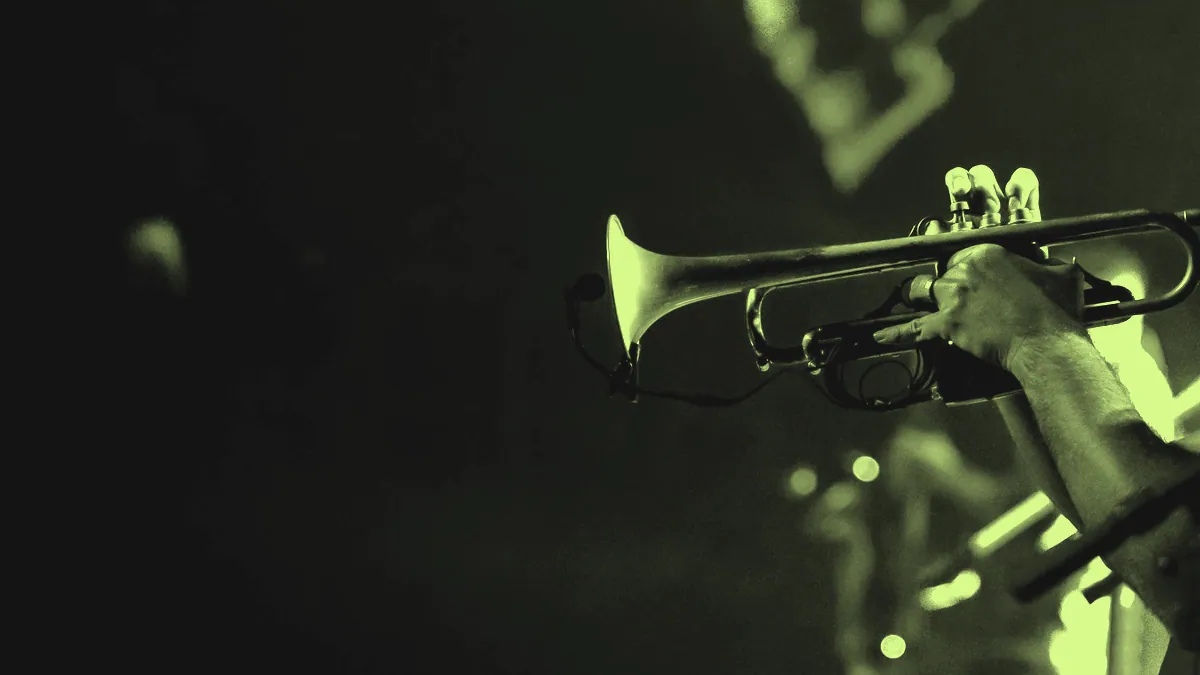
Jazz is a music built around improvisation, a style where musicians compose in real time over a chord structure, so no two performances of the same song sound the same.
It grew out of Black American communities in New Orleans in the early 1900s, pulling together blues phrasing, ragtime's syncopated rhythm, and the collective energy of gospel and brass-band music, then kept mutating for a century as musicians pushed it in new directions.
What jazz is all about
The core idea of jazz is that the written song is a starting point, not a finished product. A "tune" is really a set of chord changes and a melody, a framework, and the performance is what a musician does with that framework in the moment. That's why jazz prizes musicianship so heavily: players need a deep ear for harmony to invent lines that fit the chords as they pass, and they need to listen constantly to what the rest of the band is doing, because the music is a conversation, not a script. A jazz record captures one version of an ongoing act of invention; hear the same band play the same tune a week later and the solos will be different, sometimes completely.
That emphasis on the moment is also why jazz rewards close, patient listening more than passive listening. You're not just hearing a song, you're hearing decisions, a saxophonist choosing to hold back, a drummer nudging the tempo, a pianist leaving space instead of filling it. Once you start noticing those choices, jazz stops sounding abstract and starts sounding like people talking.
The core styles, from swing to fusion
Jazz isn't one sound; it's a lineage of styles that each answered the previous one. Knowing the rough order helps a lot when you're getting oriented.
| Style | Era | What defines it |
|---|---|---|
| Swing | 1930s, 40s | Big bands, danceable rhythm, a steady pulse built for ballrooms |
| Bebop | 1940s | Small groups, fast tempos, complex chords built for listening, not dancing |
| Cool jazz | 1950s | Softer tone, slower phrasing, more arrangement, less heat |
| Modal jazz | Late 1950s, 60s | Solos built on scales instead of fast-moving chords, more space to explore |
| Fusion | Late 1960s onward | Jazz improvisation combined with electric instruments and rock or funk rhythm |
Swing, driven by bandleaders like Duke Ellington and Count Basie, was popular music in its day, people danced to it on the radio. Bebop, pioneered by Charlie Parker and Dizzy Gillespie, turned jazz into something meant for close listening rather than dancing, with rapid, harmonically dense solos. Cool jazz relaxed that intensity into something more melodic and spacious. Modal jazz, most famously on Miles Davis's 1959 album Kind of Blue, freed soloists from chasing fast chord changes and let them improvise over a small number of scales instead, which is part of why that record still sounds so unhurried and open even to listeners with no jazz background. Fusion, which Davis also helped launch with Bitches Brew, plugged jazz into electric guitars, funk basslines, and rock energy.
Where jazz connects to the rest of American music
Jazz didn't develop in isolation. It shares deep roots with the blues, the bent notes and call-and-response phrasing you hear in a blues singer's voice show up constantly in a jazz horn solo. It absorbed gospel's harmonic warmth and rhythmic drive, especially in soul-jazz and the playing of musicians like Ray Charles, who moved fluidly between gospel, blues, and jazz phrasing. Funk borrowed jazz's rhythmic complexity and gave it back with a harder backbeat, which is exactly what fusion capitalized on. Rock and folk musicians have pulled from jazz's harmonic vocabulary for decades, and jazz has repaid the favor by absorbing electronic textures in more recent decades, from ambient-tinged records to hip-hop-influenced players like Robert Glasper. None of these genres exist in a sealed box; jazz sits at a crossroads where blues, gospel, and folk feeling meet a more advanced harmonic language.
Well-regarded albums to start with
There's no single ranked list of "the best" jazz albums that every critic agrees on, but a handful of records come up again and again as entry points because they're accessible on first listen and rewarding on the fiftieth:
- Kind of Blue, Miles Davis (1959), the modal-jazz landmark and probably the most recommended jazz album for newcomers
- A Love Supreme, John Coltrane (1965), a four-part spiritual suite that shows jazz's intensity and reach
- Time Out, The Dave Brubeck Quartet (1959), built on unusual time signatures that still feel playful rather than academic
- Mingus Ah Um, Charles Mingus (1959), a big, blues-soaked, gospel-inflected record full of personality
- Head Hunters, Herbie Hancock (1973), the fusion record where jazz and funk fully merge
Rather than chasing a "best songs of all time" list, it's more useful with jazz to follow whole albums, since much of the genre's meaning comes from how a band develops ideas across a full session, not from a single standout track pulled out of context.
How to start listening on purpose
Pick one of the albums above and listen straight through without doing anything else, jazz rewards undivided attention more than most genres because the interest is in the details of the playing, not just the melody. Notice the instruments trading focus: a horn states a melody, then a soloist takes over and stretches it, then the rhythm section (piano, bass, drums) keeps shape underneath. Try following just the bass line on a second listen, then just the drummer's cymbal pattern on a third. Each pass reveals something the last one didn't, which is the whole appeal of a genre built on musicians actually listening to each other in real time.